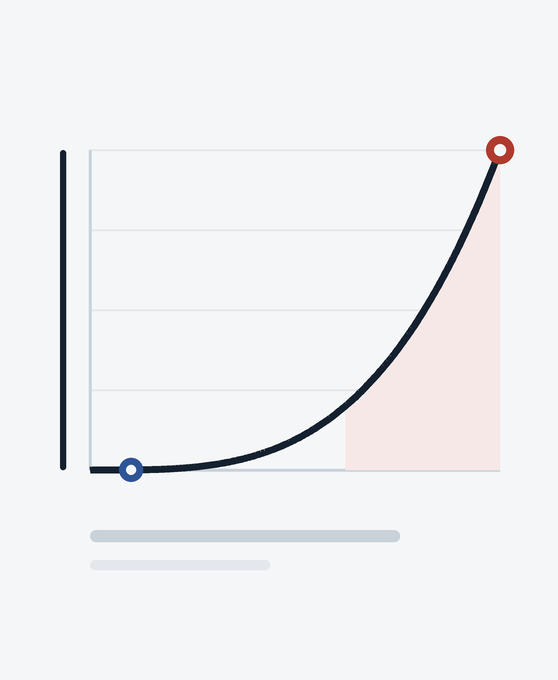
Self-healing is not a switch a platform turns on. It is a progression, and most operations teams are further along it than they think.
Self-healing networks have been promised for a decade and delivered in fragments. The reason is that autonomy is not a feature to be enabled; it is the end of a progression that starts with seeing events clearly and ends with acting on them without a human in the path. Vitria has been building the pieces of that progression since 1994, and VIA AIOps is where they currently sit. This is an honest map of the stages and what each requires.
The four stages
- Visibility — events from every domain arriving in one place.
- Intelligence — correlation and probable root cause with topology awareness.
- Knowledge — what the system learns persisting and informing the next incident.
- Autonomy — remediation executed within policy, without waiting on a human.
Most operations teams have solved the first and are somewhere inside the second. The gap between the second and the third is where most programs stall, because it requires the platform to retain understanding rather than reprocess data.
Why knowledge is the hinge
Correlation without retention means the platform is as capable on its thousandth incident as on its first. That is the ceiling most AIOps deployments hit. VIA AIOps was designed around a knowledge layer for this reason: it is what allows automated remediation to be trusted rather than merely available.
Documented results include a 50% reduction in time to restore service, 20% year-over-year efficacy improvement post-implementation, and a 28% reduction in failure rates at a content streaming provider — 11 million fewer annual failures.
What to ask in your evaluation
- Locate your team honestly on the four stages before evaluating anything.
- Ask any vendor which stage their product takes you to, and what the next one requires.
- Treat knowledge retention as an architectural question, not a feature checkbox.
- Start automation where the remediation is well understood and the blast radius is small.
- Measure at each stage. Autonomy justified by anecdote does not survive its first bad night.
Where to go next
The self-healing journey page sets out the progression in full, and the differentiation page covers what is architecturally distinct about the VIA approach.
For where this lands in practice, the use cases page carries deployment patterns by industry and problem.
- The self-healing journey — the full progression
- VIA differentiation — what is architecturally distinct
- VIA AIOps use cases
- VIA process automation
FAQ
What is a self-healing network?
One that detects, diagnoses and remediates defined classes of fault within policy, without human intervention in the loop.
Can an operations team skip stages?
No. Autonomy built on unreliable correlation automates the wrong action faster.
What makes knowledge different from correlation?
Correlation groups related events now. Knowledge retains what that grouping meant, so the next occurrence is understood rather than reprocessed.
How long has Vitria worked on this?
Since 1994 — over thirty years in model-driven computing, with patents in streaming analytics, business process management and publish-subscribe communication.