Why are Operator Struggling to Scale Agentic AI?
Many operators find that Agentic AI works well for smaller deployments and simpler tasks but faces challenges with more complex tasks and decision-making. As telecom environments become increasingly distributed across legacy infrastructure, 5G, cloud-native platforms, transport networks, and virtualized services, accuracy and trust become important operational considerations.
Vitria addresses these challenges through its Semantic Knowledge Plane, which provides AI systems with better operational knowledge to improve accuracy, reasoning, and results across complex telecom environments.
What Makes Vitria’s Semantic Knowledge Plane Different from a Traditional Database?
The value of semantic knowledge goes beyond simply connecting data. It provides an understanding of the operational relationships, dependencies, and context between systems, services, and infrastructure.
For example, a Kubernetes pod running on a host server represents a containment relationship with total dependency, while two interconnected routers may have only a partial dependency.
By capturing these relationships and their context, the Semantic Knowledge Plane enables AI systems to perform more accurate reasoning, root cause analysis, and operational automation across complex telecom environments.
Why Does Vitria Advocate “Incremental Transformation”?
Vitria recommends a focused approach to transformation rather than attempting large-scale, multi-year operational rebuilds. Operators can begin with a minimum viable knowledge graph, deploy capabilities in 90- to 100-day chunks, and expand their operational knowledge incrementally over time.
This approach helps reduce implementation risk while allowing organizations to demonstrate measurable business outcomes and continuously improve their operational intelligence and automation capabilities.
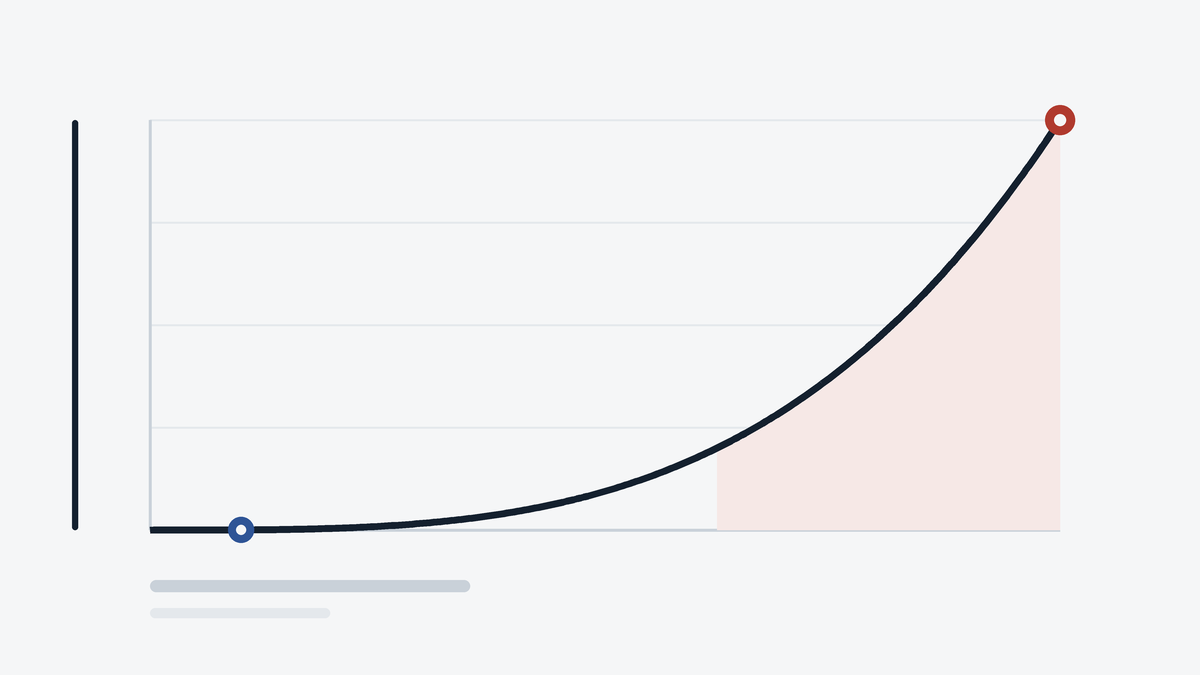
While each step in the journey is incremental, the overall transformation can be significant.
What operational Impact are Operators Seeing from Knowledge-driven AI?
Knowledge-augmented AI and semantic correlation can deliver measurable improvements across telecom operations. According to Vitria:
- One operator detected and triaged problems before customer impact 95% of the time
- 20–30% year-over-year NOC productivity improvements, sustained over more than five years at a long-term customer
- Faster root cause identification and remediation
- Reduced MTTR for complex service degradations
Knowledge-driven AI can also support cross-domain correlation across radio, transport, cloud, and data center environments, helping address operational issues that span traditionally siloed monitoring systems.
How Does Semantic Knowledge Improve Explainability and Trust?
Semantic knowledge can strengthen AI-driven operations through better reasoning, improved accuracy, explainability, verifiability, and guardrails.
By using knowledge graphs to guide an AI system through a structured chain of reasoning, operators can better validate recommendations, reduce the risk of hallucinations, and constrain AI behavior to trusted operational knowledge.
This provides a more transparent and verifiable foundation for deploying Agentic AI in mission-critical telecom environments.
Why Is Knowledge Becoming a Strategic Advantage for Telecom Operators?
Knowledge is becoming more than a technical capability; it can serve as a long-term operational asset for telecom operators. Knowledge-driven architectures can help operators:
- Accelerate automation
- Improve operational agility
- Scale autonomous operations more effectively
- Support faster innovation across evolving networks
As AI models continue to evolve, operational knowledge can remain valuable because it represents persistent learning that can continuously expand and improve. As the industry moves toward autonomous networks, knowledge provides a foundational layer for building scalable, explainable, and trusted Agentic AI.
Who should read it
Designed for telecom operators, AI leaders, and technology teams exploring the next stage of autonomous operations. The discussion provides practical perspectives on scaling Agentic AI, building a Semantic Knowledge Plane, improving operational intelligence, and creating greater trust in AI-driven decision-making.
A discussion featuring Vitria Technology and Appledore Research on how knowledge can help telecom operators build more accurate, explainable, and scalable Agentic AI capabilities.
Read the full transcript: The Role of Knowledge in Autonomous Operations: Appledore Research Podcast